
Haier Rolls Out WhatsApp AI Customer Service in Malaysia — A Pattern SMEs Can Copy
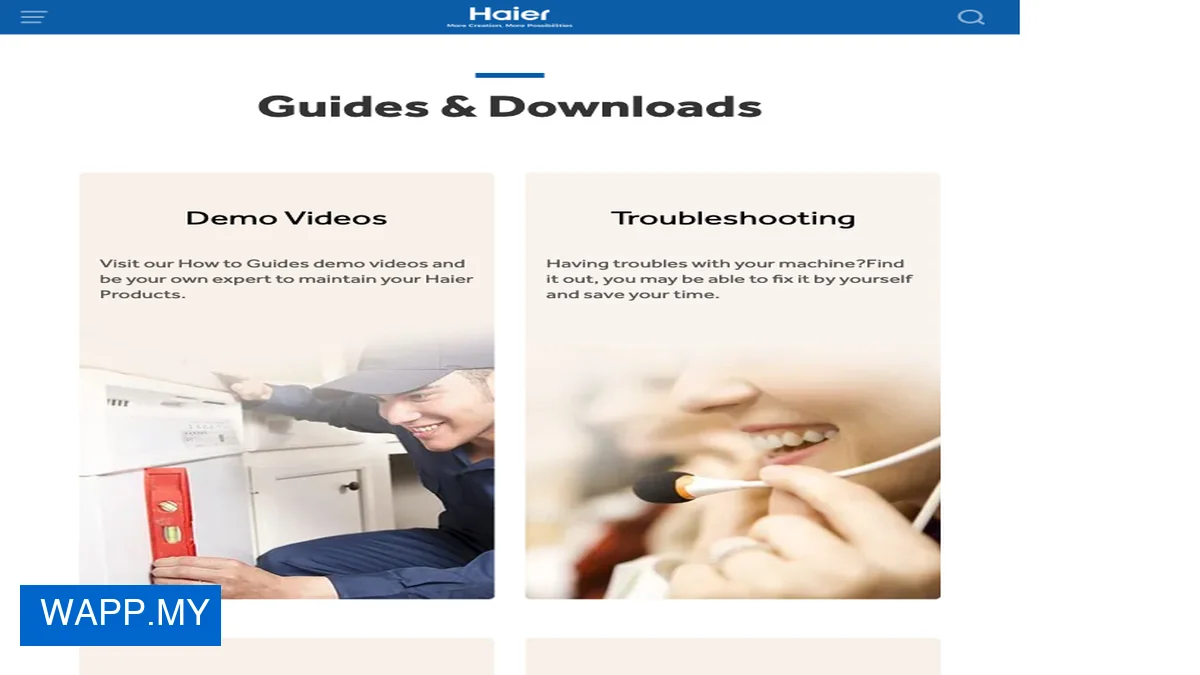
In mid-2026, Chinese tech media reported that Haier, one of the world's largest home-appliance makers, had moved its overseas customer service onto a unified WhatsApp platform, with Malaysia as the first market for the pilot.
The detail worth studying is not the company's size — it is the shape of what was built. A global brand decided that the customer's default messaging app was a better home for service than a phone queue or a web form. This article describes the pattern: what the rollout covers, what a WhatsApp layer does that a website widget cannot, and how a Malaysian SME can copy the structure without an enterprise budget. We avoid Haier figures we cannot verify.
What the Malaysia WhatsApp AI Rollout Actually Covers
Read past the branding, and the reported deployment groups into four capability blocks under a single WhatsApp number:
| Capability | What it does |
|---|---|
| Unified intake | Enquiries from phone, email and social media land in one queue, so the agent sees the customer's history instead of asking them to repeat it. |
| Self-service tracking | Status updates for an open job are pushed into the same chat, so the customer checks progress without calling. |
| Proactive follow-up | After a job closes, a short message asks how it went. Feedback arrives without anyone chasing it. |
| Contact routing | Every interaction ends by nudging the customer to save the official number. |
None of the four is exotic. What is notable is that they were designed together on the channel customers already use, rather than bolted onto a legacy system one feature at a time.
Why WhatsApp Is the Right Service Layer in Malaysia
Malaysia suits this pattern unusually well, for structural rather than fashionable reasons.
- WhatsApp is already installed. For most Malaysian smartphone users it is the default way to send a message.
- No login, no password, no app switch. A support channel that demands a new account loses people at the sign-up screen.
- A real multilingual market. Malaysian customers move between Malay, English and Chinese, sometimes mid-sentence.
- It reaches people a website does not. Many Malaysian consumers rarely browse a brand site but message daily.
- Threads persist. Unlike a phone call, the conversation leaves a record the customer can scroll back through.
WhatsApp campaigns run through WAPP.MY have measured around a 98% open rate — the same trait that makes the channel work for marketing makes it work for service.
What a WhatsApp Service Layer Does That Web Chat Cannot
A live chat widget and a WhatsApp thread both look like "chat", but they behave very differently. Confusing the two is the most common design mistake we see.
| Behaviour | Website chat widget | WhatsApp service layer |
|---|---|---|
| Where the customer is | Only on your site, only while the tab is open | On their phone, wherever they are |
| When you reply | They have usually left the page | The thread notifies them and is still there tomorrow |
| Reaching non-visitors | Impossible | Normal — many chats never touch the website |
| Conversation history | Lost when the session ends | Kept in the chat the customer can reopen |
| Asking for feedback later | Needs a separate survey tool | Same thread, same day |
| Failure mode | Cheap to install, easy to forget | Cheap to start, easy to under-staff |
The consequence is simple. A website widget converts people who are already shopping. A WhatsApp layer serves people who already bought.
The Setup Pattern a Malaysian SME Can Copy
The enterprise version includes CRM integration, ticket sync and a model trained on company documents. You need none of that to capture most of the benefit:
- Create one official entry point. A single number or link, on your Instagram bio, Google Business Profile, receipts and website. Extra numbers fragment the service history you are trying to build.
- Pre-fill the first message. A WhatsApp link can open the chat with text already typed, so the customer only presses send.
- Write down your five most common intents. Order status, price, stock, warranty or repair, and location cover most routine enquiries.
- Define the escalation rule before you automate. Decide which phrases must always reach a person, in one sentence your team can repeat.
- Capture the contact, then reuse it. Follow-up is the cheapest service improvement available once the thread exists.
A free WAPP.MY account covers the first and fifth steps today: a vCard at wapp.my/v/yourname and a Bio Links page holding up to 10 tracked links give you one professional entry point customers can save. Prefer to send people to a page rather than a chat? A WAPP.MY short link on wapp.my/r/yourbrand does that job. The short-link feature is labelled BETA, and a custom alias must be 6 to 30 characters using lowercase letters, digits and hyphens, with no leading or trailing hyphen.
Response Time and After-Hours Coverage
This is where messaging changes the economics of service. A phone line has to be staffed. A WhatsApp thread does not have to be answered instantly to be useful, but the first reply sets the customer's expectation for everything after it.
- Acknowledge inside business hours. A short "we have your message and a person will reply" beats silence, because silence is what makes a customer phone a competitor.
- Answer the routine questions outside them. Opening hours, price ranges, location, stock and how to start a warranty claim need no human.
- Keep a visible human path. An automated reply with no route to a person turns a small problem into a public complaint.
Be honest about what you staff. A business promising a 24-hour response and delivering 36 hours is worse off than one that says "we reply the next working morning" and does it every time.
Where AI Service Hands Off to a Human
The handoff determines whether an automated layer helps or hurts. Our rule of thumb:
- Automate the lookup, not the judgement. Order status and opening hours have one right answer. Refunds, complaints and anything involving a specific person do not.
- Escalate on uncertainty. When confidence is low, or the customer repeats the same question, involve a person rather than rephrasing the bot.
- Escalate on emotion and money. "Refund", "complaint", "lawyer", or a second failed attempt should reach a human in every language you operate in.
- Always offer the exit. A permanent "reply 0 for a person" removes the main reason customers distrust automated service.
- Never claim to be human. Customers forgive automation. They do not forgive being misled about it.
What to Measure
Volume is the metric most businesses track and the least useful alone — a rising message count can mean better service or a worse product. Track these instead:
- First response time — the gap between the customer's message and any reply at all.
- Resolution without escalation — how much routine load the automated layer genuinely absorbs.
- After-hours share — how many conversations start when no one is on duty.
- Escalation rate — a sharp rise may mean your intent list is wrong, not that customers are difficult.
- Repeat contacts within seven days — the clearest sign a first answer solved nothing.
- Satisfaction on closed conversations — one question inside the existing thread is enough.
If your WAPP.MY links feed these conversations, the dashboard analytics give you the upstream half: which links were opened, from which country, on which device, and which campaign produced the conversation. Analytics are reported at country level, so read them as a directional signal, not street-level attribution.
Common Pitfalls
- Copying the platform without the process. If every question still needs the same person, you get the same backlog on a nicer channel.
- Broadcasting and calling it service. A one-way promo channel is not support. If customers cannot reply and get an answer, you have added noise.
- No named owner. Someone must own the intent list, the escalation rules and the response times.
- Ignoring the language mix. Test your replies in Malay, English and Chinese, because customers switch mid-sentence.
- Automating the hard cases and staffing the easy ones. It is the reverse of what works.
- Forgetting the physical world. A QR code on a shopfront, receipt or parcel insert is often the fastest way to move an offline customer into the thread.
Getting Started with WAPP.MY
WAPP.MY has provided Malaysian businesses with WhatsApp infrastructure since 2019. More than 150,000 Malaysian businesses use the platform, which has generated over 18 million links. A free account includes a vCard page, a Bio Links page with up to 10 tracked links, the WhatsApp link generator, the short-link tool and dashboard analytics.
You need one official WhatsApp entry point, a short list of intents you can answer automatically, and a handoff rule your team actually follows. Start from the WAPP.MY Resources hub, compare the two link types in Short Link vs WhatsApp Link, then build your entry point from the WAPP.MY WhatsApp link page.
Ready to Get Started?
Create your free account in 30 seconds. No credit card needed.
✨ Create Your Free Account